Steel structure vs concrete cost UAE: 2026 comparison
Steel structure vs concrete cost UAE comparisons usually go wrong before the first number is written down, because steel is priced per tonne and concrete per square metre. This guide normalises both into AED per m2 of floor and works through a full 2,000 m2 industrial warehouse so developers, EPC teams and facility owners can compare like for like.
Why work with APEX STEEL WORKS L.L.C
- In-house steel fabrication, stainless steel work, GI welding and lathe work under one roof
- Google rating of 5.0 from 32 customer reviews
- Fabrication and erection crews working across all seven emirates
- Galvanizing, intumescent fireproofing and crane erection managed as one scope
- Quotes itemised by tonne of steel and square metre of slab, with a fixed validity period
- Direct line for drawing and BOQ review on +971 52 270 9796
Steel structure vs concrete cost UAE: the two numbers that matter
Steel is quoted in AED per tonne of fabricated and erected steel. Concrete frames are quoted in AED per m2 of slab or built area. Those two units do not talk to each other, and that is exactly where most comparisons fall apart.
In the UAE in 2026, a straightforward portal frame or PEB package, supplied, galvanized, delivered and erected, sits around AED 6,500 to AED 9,500 per tonne. The spread comes from section size, connection complexity, galvanizing thickness, transport distance and whether intumescent fireproofing is inside the rate.
An RCC frame for a single storey industrial or commercial building sits around AED 900 to AED 1,500 per m2 of built area, including rebar, formwork, ready-mix, pumping and labour.
Normalising steel to AED per m2 of floor
To compare, you need steel weight per m2 of floor. A single storey warehouse frame without a crane runs 25 to 35 kg/m2. Add an overhead crane, a mezzanine or heavy services and it climbs to 45 to 60 kg/m2.
At 40 kg/m2, every AED 1,000 per tonne equals AED 40 per m2 of floor. So AED 7,000 per tonne becomes AED 280 per m2 for the frame alone. That is the figure you set against a concrete frame rate. It is also why a steel frame looks cheap at frame level, before foundations and cladding are added to both sides of the comparison.
If you want your own tonnage assumptions checked against real drawings, steel structure fabrication and erection services can be priced directly from a PDF set.
Cost line by line on a 2,000 m2 warehouse
Take a 2,000 m2 industrial warehouse in Dubai Industrial City, 30 m clear span, 8 m eaves, insulated panel envelope and a 150 mm ground slab. Both options carry the same slab and envelope, so the comparison isolates the frame, the foundations and the programme.
Steel option
- Structural steel supplied and fabricated, 80 t at AED 7,000/t: AED 560,000
- Hot dip galvanizing, 80 t at AED 1,100/t: AED 88,000
- Transport to site: AED 40,000
- Crane hire and erection: AED 140,000
- Intumescent fireproofing where Civil Defence requires it: AED 120,000
- Pad foundations and ground beams: AED 320,000
- 150 mm ground slab: AED 480,000
- Insulated roof and wall panels, 3,200 m2 at AED 210/m2: AED 672,000
- Total: AED 2,420,000, or AED 1,210 per m2
Concrete option
- Rebar, 170 t at AED 3,000/t: AED 510,000
- Ready-mix concrete, 950 m3 at AED 300/m3: AED 285,000
- Formwork, 4,800 m2 at AED 55/m2: AED 264,000
- Steel fixing, pouring, pumping and labour: AED 230,000
- Pad foundations and ground beams: AED 410,000
- 150 mm ground slab: AED 480,000
- Insulated roof and wall panels, 3,200 m2 at AED 210/m2: AED 672,000
- Total: AED 2,851,000, or AED 1,426 per m2
| Item | Steel option | Concrete option |
|---|---|---|
| Frame, fabrication, fire protection and erection | AED 828,000 | AED 1,289,000 |
| Foundations | AED 320,000 | AED 410,000 |
| Ground slab | AED 480,000 | AED 480,000 |
| Insulated envelope panels | AED 672,000 | AED 672,000 |
| Total | AED 2,420,000 | AED 2,851,000 |
| Cost per m2 of floor | AED 1,210 | AED 1,426 |
The gap is AED 431,000, about AED 215 per m2 of floor in favour of steel, before the programme saving is counted. VAT at 5 percent and authority fees are excluded from both columns.
Excellent service and very good work. The quality was great, and the price was one of the best I found. Highly recommended! Romosh Al Eyoun, 5/5 on Google
Programme and cash flow
Steel fabrication for 80 t runs 4 to 6 weeks in a UAE workshop, followed by 3 to 4 weeks of erection with a small crew and one crane. That is 8 to 12 weeks after drawings are approved.
Concrete is slower because formwork has to cycle and concrete has to cure before props come out. A single storey RCC frame of this size takes 20 to 28 weeks including foundations and slab, assuming steady labour and no ready-mix delays.
Earlier completion is earlier rent. At AED 45 per m2 per year for a 2,000 m2 warehouse in Dubai, that is AED 90,000 a year, roughly AED 1,730 per week. Saving ten weeks is about AED 17,000 in rent, and considerably more if you are carrying construction finance at 8 to 10 percent.
The counterweight is cash flow. Steel is paid up front, typically 50 to 70 percent of the steel value on order, before anything lands on site. Concrete is paid as work progresses, which suits developers with tight working capital.
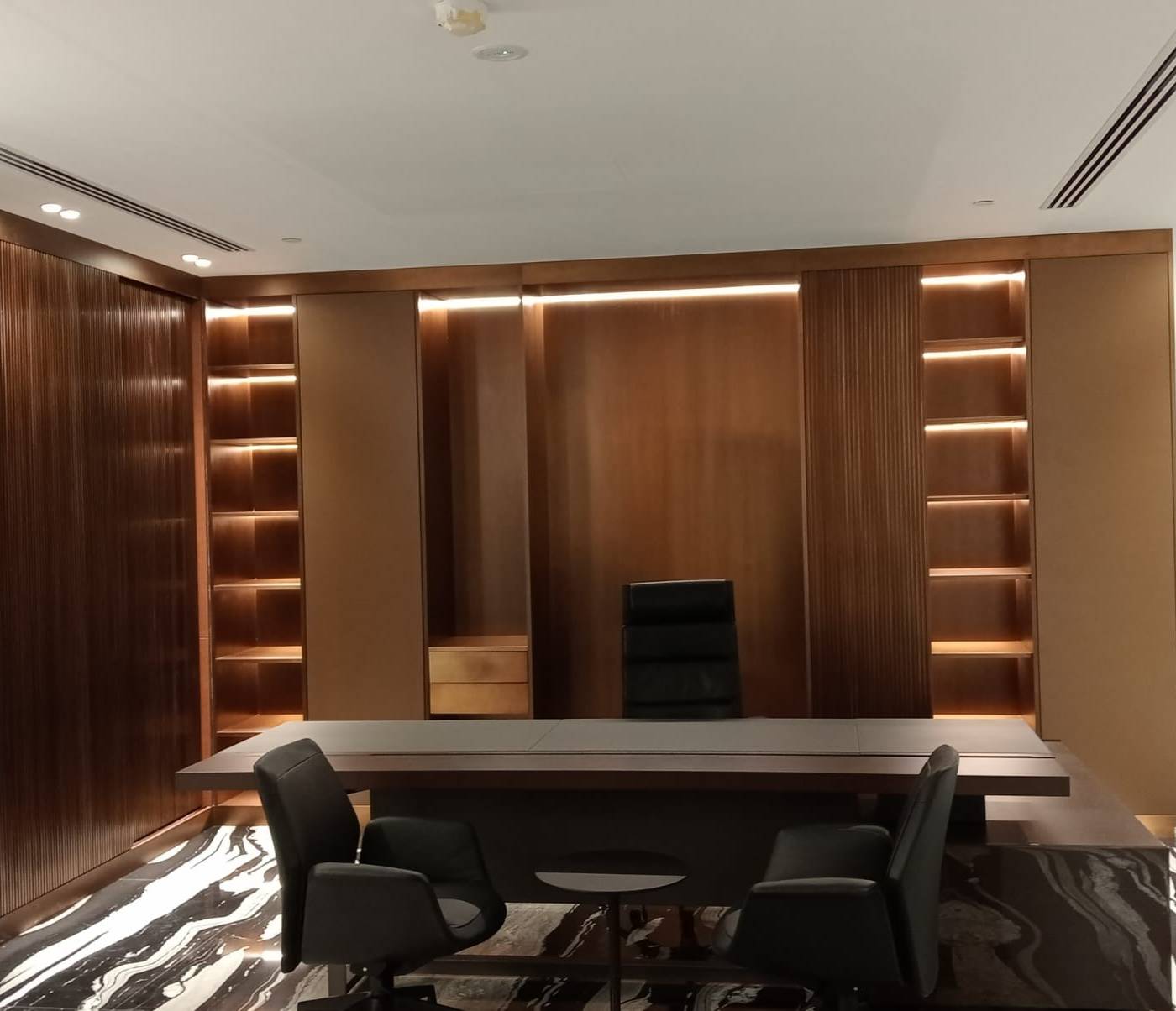 Metalwork and finishes delivered alongside structural packages, the same tolerance control that governs a steel frame.
What flips the decision: spans, ground and location
Long span is the biggest single driver. Steel wins clearly above 18 to 20 m. A 30 m column free span in concrete needs deep beams, loses headroom and adds weight to the foundations. Steel does it with a tapered portal frame and purlins.
Foundation savings. A steel frame is 30 to 40 percent lighter than RCC, so pad footings shrink. In sabkha ground across Sharjah and Ajman, or where the water table sits high near the coast, that can remove piling altogether or cut pile lengths. This is where steel often pays for its own premium in weeks.
Soil, basements and floors. Basements, multi level car parks and heavy industrial floors push you back to concrete. Racking loads of 5 to 7 t/m2 and vibration sensitive plant equipment also favour stiff RCC frames and thicker slabs.
Coastal exposure. The coastal belt in Dubai, Abu Dhabi, Sharjah and the Northern Emirates is a severe salt and humidity environment. Galvanizing at 85 microns plus a decorative top coat adds roughly AED 1,000 to AED 1,400 per tonne. Concrete is not immune either, because chloride attack on rebar starts showing around year 15 to 20 on exposed uncoated structures.
Fire, thermal and durability compliance in the UAE
Civil Defence approval is a design constraint, not paperwork at the end. Single storey warehouses with large compartments often accept unprotected steel members, but storage hazards, mixed occupancy or floor areas beyond the compartment limits trigger a 60 minute fire resistance requirement.
Intumescent paint runs AED 250 to AED 450 per m2 of steel surface area and is the usual route where the finish is on show. Board protection is the alternative in plant rooms and service areas. Concrete earns fire resistance from cover, which is one reason it dominates basements, shafts and escape stairs.
Acoustics and thermal performance. Concrete separates units and floors better, thanks to mass. Steel needs added mass, floating floors or resilient layers, plus insulation to break the thermal bridge where the frame meets the cladding. In air conditioned warehouses and light industrial units, that insulation cost is real and belongs in the comparison.
Durability. Both materials last if specified properly. Steel needs a maintained coating system in coastal humidity. Concrete needs crack control, correct cover and a repair plan. Submissions go through Dubai Municipality, the DDA or Trakhees for free zone and port projects, with structural calculations signed by a licensed engineer, and the Civil Defence fire strategy is confirmed at the same stage. More background sits in our UAE structural steel and steel fabrication guides.
When steel wins, when concrete wins, and how to compare fairly
Steel wins on long span warehouses and PEB sheds, plant and port structures, fast track programmes, vertical extensions and retrofit mezzanines over existing buildings, and remote sites in the Northern Emirates where formwork carpenters and site labour are scarce and expensive.
Concrete wins on high rise above roughly 10 storeys, heavy industrial floors and plant rooms, basements and podium decks, acoustic separation between tenants, and plain box structures where local ready-mix is cheap and the programme is not critical.
I’m really happy with the work done by Apex Workshop. They are very professional, knowledgeable, and pay attention to even the smallest details. alhaf malik, 5/5 on Google
Six steps to a fair comparison
- Ask both contractors for the tonnage and slab area assumptions behind their rates, in writing.
- Fix the scope boundary. Does the steel rate include purlins, cladding, gutters, downpipes, fireproofing and touch up paint. Does the concrete rate include waterproofing, blockwork and screed.
- Price the foundations separately for each option, because steel and concrete frames carry different loads into the ground.
- Confirm VAT and authority fees. Add 5 percent VAT plus Dubai Municipality, DDA, Trakhees or Civil Defence charges, which typically add another 3 to 6 percent.
- Set a price validity period. UAE steel section prices move, so ask for 14 to 30 days validity on the tonnage rate and a clear escalation clause.
- Normalise everything to AED per m2 of floor, then add programme cost and financing cost before signing.
See the actual scope delivered on site in our steel structure projects delivered in the UAE, or request a steel vs concrete cost comparison for your project and send the drawings.
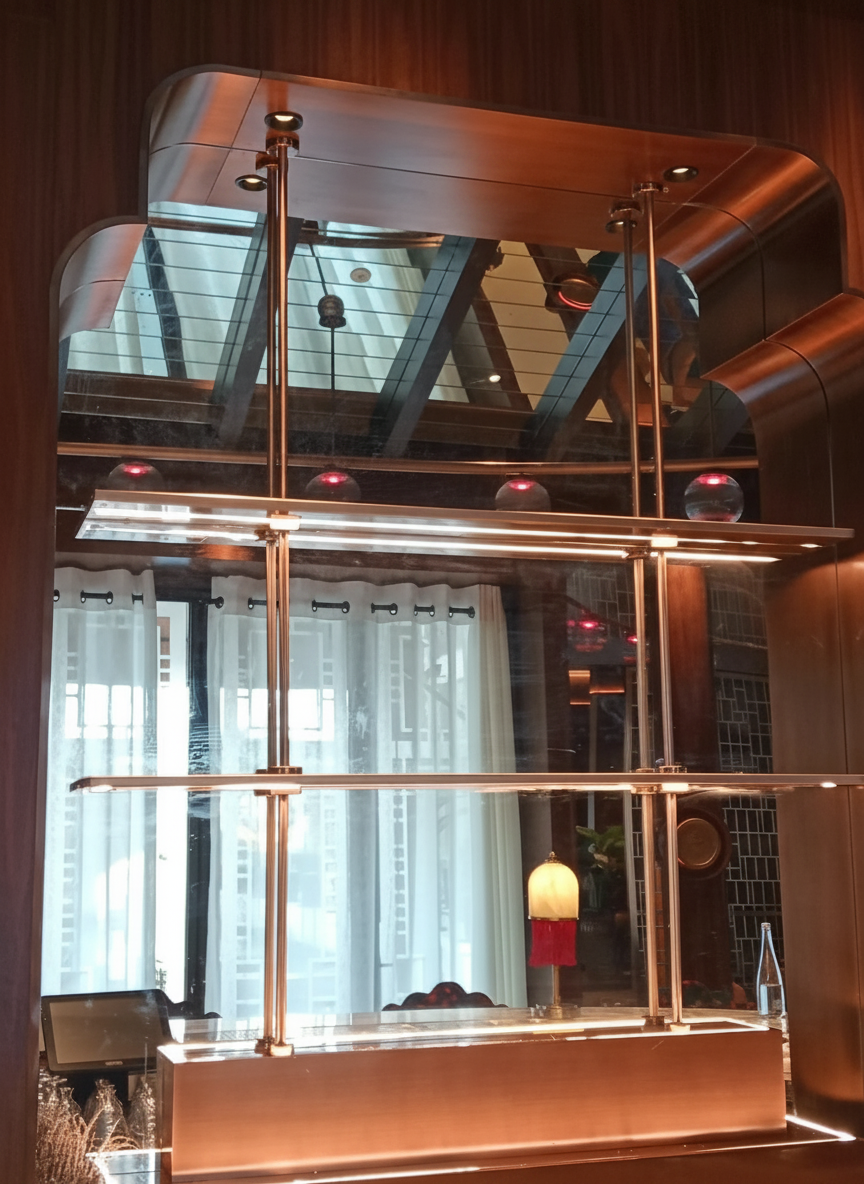 Polished bronze uprights and glass shelving, an example of the precision fabrication applied to structural steel.
Frequently asked questions
What is the steel vs concrete cost per m2 in the UAE in 2026?
For a single storey industrial building, a galvanized steel PEB frame with an insulated envelope lands between AED 1,000 and AED 1,450 per m2 of floor. An RCC frame with the same envelope runs about AED 1,200 to AED 1,700 per m2. The gap narrows on very simple boxes and widens once spans pass 20 m or ground conditions demand piling.
Steel structure vs concrete cost UAE: which is cheaper per m2?
On frame and foundations alone, steel is usually 10 to 20 percent cheaper for long span single storey buildings in the UAE. Concrete becomes cheaper once you add basements, heavy floor loads, acoustic separation or high rise structure. Neither wins everywhere, so the answer depends on span, ground and programme.
How much longer does concrete take than steel?
An RCC frame for a 2,000 m2 warehouse takes 20 to 28 weeks including curing and formwork cycles. The equivalent steel frame is fabricated in 4 to 6 weeks and erected in 3 to 4 weeks, so 8 to 12 weeks in total after drawing approval. That difference usually decides the project before cost is even discussed.
Is steel or concrete better for a warehouse in Dubai or Abu Dhabi?
For a clear span warehouse above 20 m with a fast handover, steel is almost always the better commercial choice in Dubai, Abu Dhabi and Sharjah. Concrete stays competitive on small spans, multi storey storage and units that need heavy floor loading or acoustic separation between tenants.
Does the UAE allow steel structures for warehouses and industrial sheds?
Yes. Steel frames are widely approved for warehouses, industrial sheds and plant structures. Submissions go through Dubai Municipality, the DDA or Trakhees with structural calculations from a licensed engineer, and Civil Defence fire protection requirements are confirmed at the same stage to avoid a redesign later.
How much does a 2,000 m2 steel warehouse cost in the UAE?
Around AED 2.4 million to AED 3.2 million for frame, foundations, slab and insulated envelope, excluding MEP, offices, external works, VAT and authority fees. Rates move with steel section prices, so ask for a fixed validity period on the tonnage rate before you commit.