Stainless steel bar counter Dubai: a specifier's guide
A bar counter is four pieces of metalwork, not one: front cladding, bar top, back counter and the carcass underneath. Each has its own gauge, joint detail and failure mode. Get the order of work wrong and you pay for the same counter twice.
What a bar counter actually covers
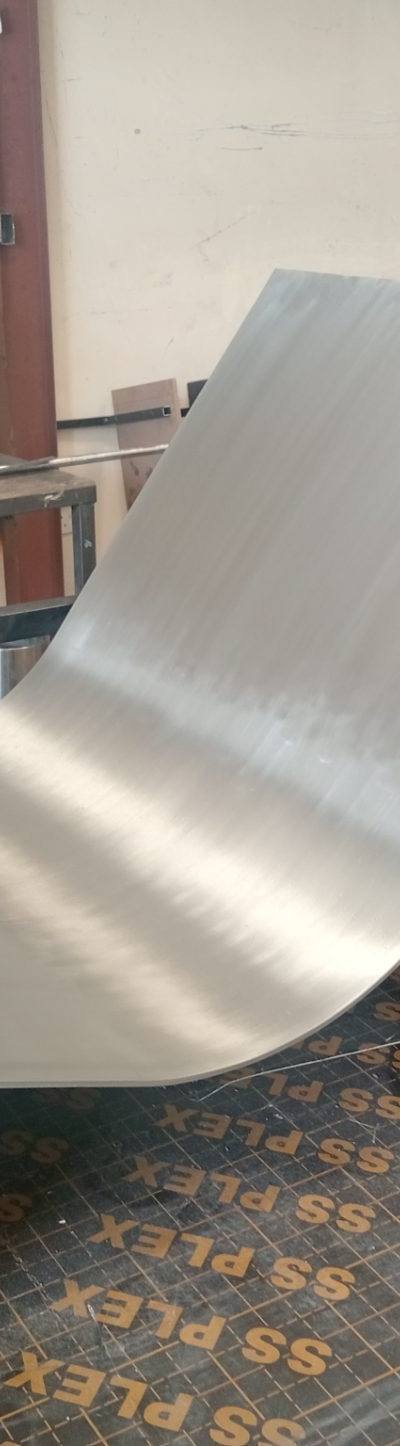
Bar counter cladding is the face customers lean on. Usually 1.2mm stainless folded into panels over a ply or MDF core, or fixed to blockwork where the bar is structural. It takes the most abuse and shows the most marks.
The bar top is the working surface. It carries the weight, the ice buckets and the glass wash overspill, and it wants to be a single piece where the plan allows. A top is only as flat as the subframe under it.
The back counter faces staff: sinks, speed rails, glass storage, sometimes a coffee machine. Plumbing and power have to be agreed before steel is cut, because moving a sink aperture after fabrication means a new panel.
The carcass is blockwork, joinery or a steel frame. We build the metal, not the blockwork, and that division is where bar jobs lose a week.
This is the same stainless steel interior metalwork for fit-out we make for reception desks and retail counters, so the tolerances are shopfront tolerances.
Grade, gauge and the core you template from
304 covers most indoor bars in the UAE. 316 earns its extra cost on coastal sites, where salt air and chlorinated sanitisers pit a 304 top along the front edge within a season or two. If the bar sits near the water, or the doors stay open to the sea breeze, spec 316 for the top and splashback at least.
Thickness is a separate argument from grade.
| Part | Typical fabrication | Step up when |
|---|---|---|
| Front cladding | 1.2mm folded, fixed to a set core | Trolleys hit it, or wide panels start to oil-can |
| Bar top | 1.5mm welded to a subframe | The span is long or an ice well is cut in |
| Back counter | 1.2mm, sink apertures cut and welded | Staff wash down hard or use strong sanitisers |
| Splashback | 1.0 to 1.2mm | It runs above hand height |
Then the sequence that catches people. Nobody can template a bar until the core is built, plumb and fixed, the floor is level and the services are cut. Measure earlier and the cladding arrives for a bar that has since moved 15mm.
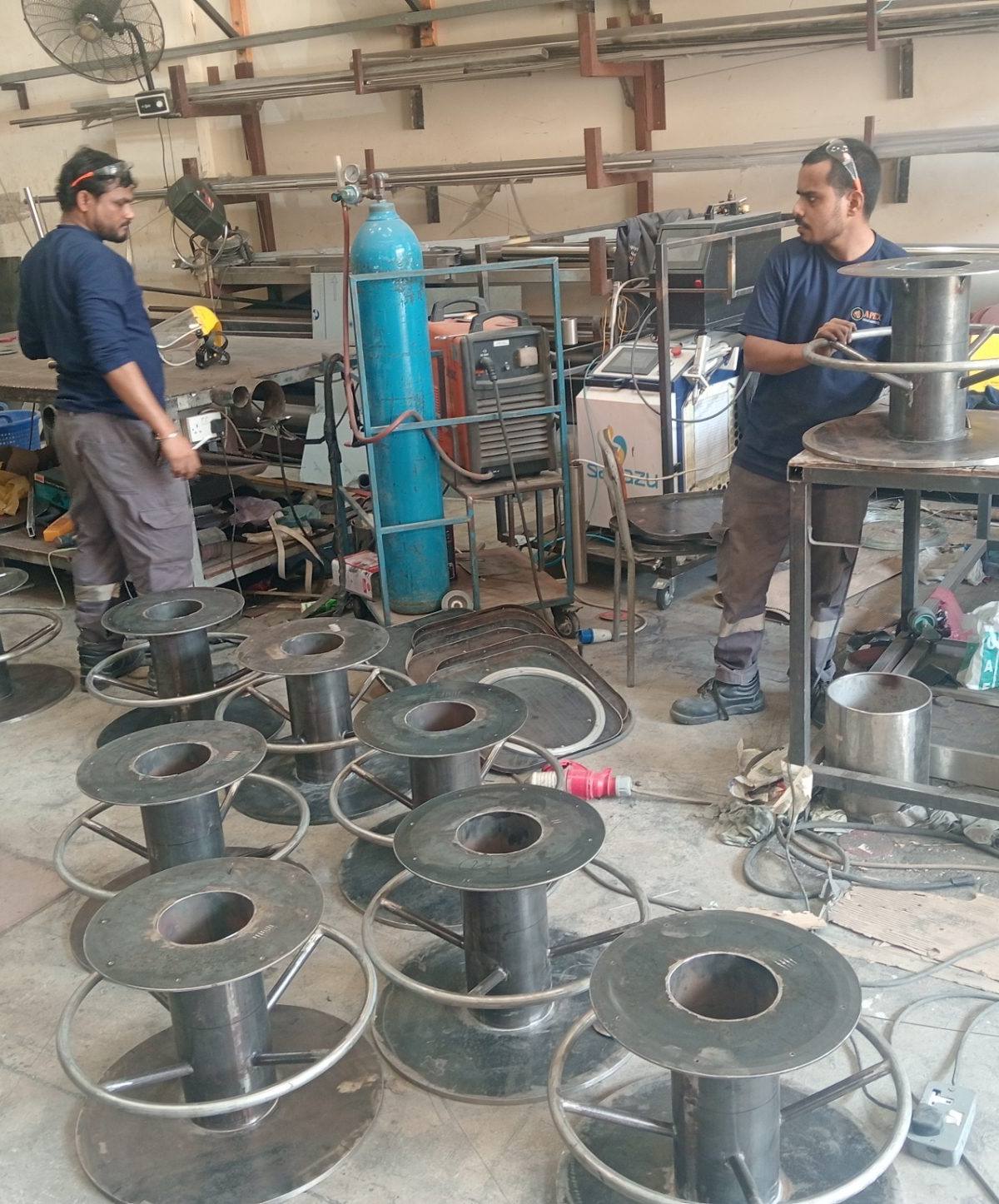
We fabricate in our own workshop in Ajman, so the template date is a real date. Panels are cut to it instead of trimmed on site, which is the difference between a 3mm shadow gap and a mastic bead.
We hired them as a subcontractor on that job. They finished on time and the fit was good. Pushpjeet Singh, 5/5
Fit is the whole job on a bar.
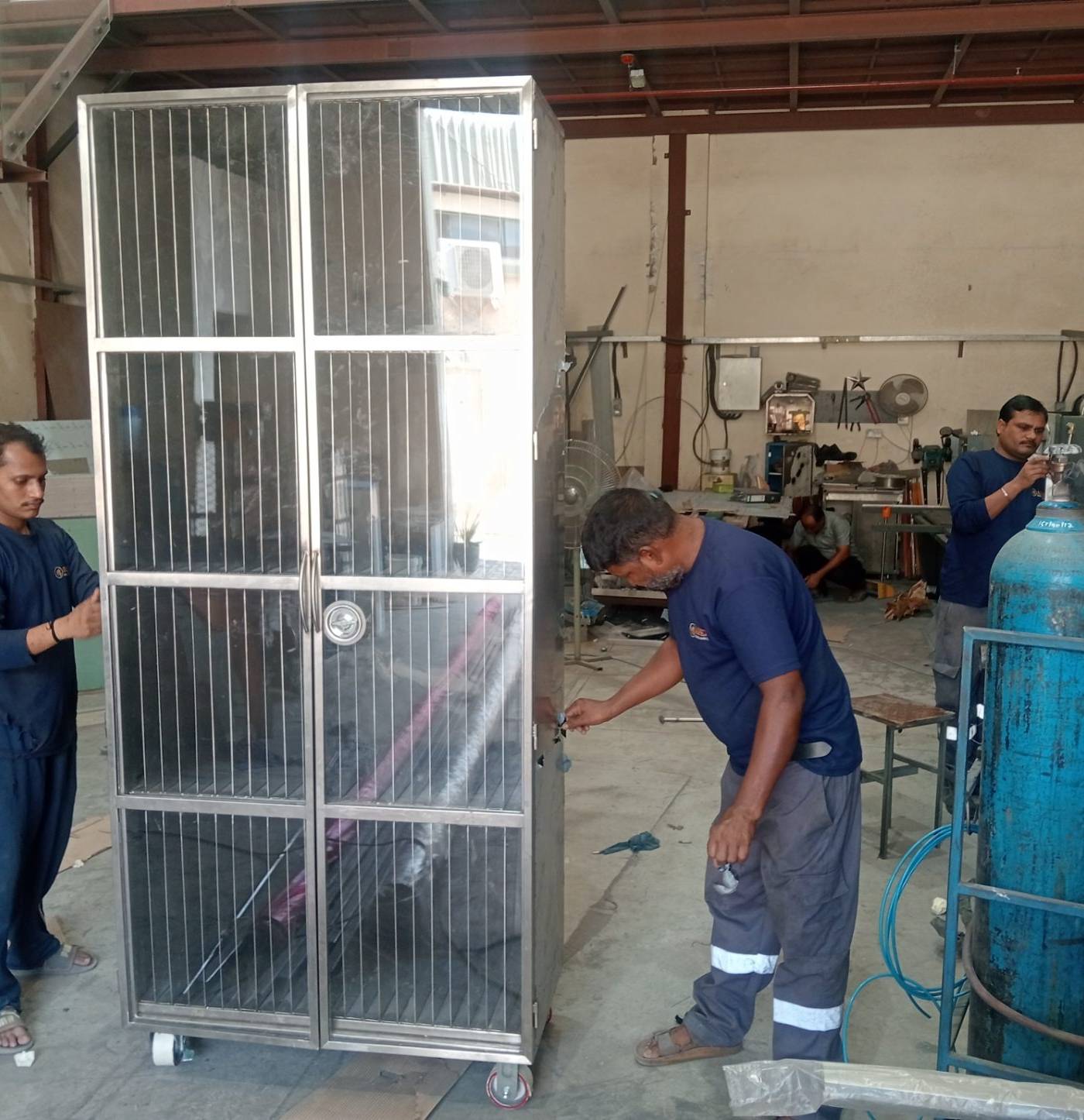
Custom stainless carcass work: mesh doors, castors and a frame that has to stay square through fabrication and finishing.
Edges, welds and the finish
Corner radius decides how the bar reads and how it survives. A tight 3mm radius looks sharp and dents on the first trolley. A 10 to 20mm radius looks softer, costs the same to form and shrugs off knocks. Decide it on the drawing.
Welds should be hairline, ground and polished out. Polishing removes the brushed grain, so a seam in the middle of a brushed panel reads as a patch. Put every weld on a change of plane, a corner or a deliberate panel break. On mirror finish no weld hides at all, so fold the metal and avoid welding visible faces instead.
Brushed suits a top in daily use. It hides fingerprints, takes a local repair and looks the same in year three. Mirror is extraordinary for a month and then shows every hand. Good for a back bar, poor for the front edge.
An electroplated stainless steel bar counter is what designers ask for now: brass, black, copper and bronze tones over stainless. We plate in our own workshop in Ajman, so the sample you approve is the sample we match, and a colour change does not become a six week subcontract. A plated surface on a working top wants a clear coat and no abrasive cleaner. PVD wears harder, but the colour range is narrower and parts travel off site for rework.
There is more on these choices in our stainless steel fit-out guides.

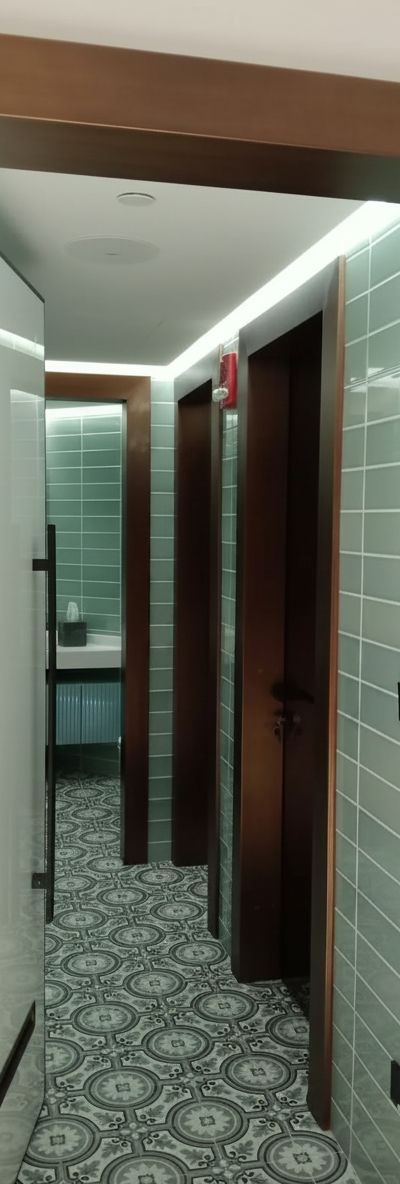
A completed bar front, curved and lit. A shape like this is only as good as the core the cladding is templated from.
Sinks, ice wells and the parts that touch liquid
F&B work adds plumbing to metalwork, and that is where hygiene inspections are won or lost. A welded sink bowl beats an inset bowl every time: no silicone line going black, no lip to trap debris, and a radius in the corner a cloth can reach. The fall to the drain gets formed into the top, not fixed with washers on site.
Ice wells need insulation, a drain and a lid that closes flat. Glass washers need ventilation and an access panel behind the cladding, because someone will service that machine and they will not want to cut your panel to do it.
A stainless steel counter for a restaurant in Dubai has to survive the cleaning regime, not just the menu. Chlorinated sanitisers are hard on 304 and wire wool destroys a brushed grain. Tell the fabricator how the bar team cleans before the finish is chosen.
The sequence, the delays, and what a fair quote itemises
Jobs run in five steps.
- Drawing and site information in.
- Scope and finish sample approved.
- Shop drawing issued for sign-off.
- Bar counter fabrication in the workshop.
- Installation and snagging on site.
Two things delay it. Late core, where blockwork or joinery is finished after templating, so the cladding is made to a shape that no longer exists. Late finish sign-off, where a plated colour is approved after cutting has started and panels have to be stripped and re-plated. Sample first, then release.
A fair quote itemises the drawing revision it is priced against, the grade and gauge per part, the finish by name with a sample reference, whether the subframe is included, delivery, installation and a snag visit. One line saying supply and fix stainless steel bar counter is not a quote, and it is the line you argue about in month two. Our Google rating is 5 from 34 reviews, and the ones that matter on bar work are about fit.
Send the dimensioned drawing, or a clear sketch with overall length, top depth, height and sink and appliance positions, plus two or three photos of the site as it stands now. Add the building name and area so access and lift size can be checked. WhatsApp is fastest, and a fixed price comes back off that drawing rather than a rate per metre. Send your bar counter drawing on WhatsApp for a free fixed quote
Frequently asked questions
Is 304 or 316 stainless better for a bar counter in Dubai?
For a bar near the water, or one with doors open to the sea breeze, 316 for the top and splashback is worth the difference. Salt air and chlorinated sanitisers pit 304 along the front edge surprisingly fast. Inland, 304 is usually enough.
How thick should a stainless steel bar top be?
1.5mm over a welded subframe handles normal bar use. A bouncy or drumming top is almost never fixed by going thicker, it is fixed by adding subframe. If an ice well is cut into the span, the subframe matters more than the sheet.
Can you make a brass or black bar counter in stainless steel?
Yes. We electroplate stainless in brass, black, copper and bronze tones in our own workshop, and you approve a physical sample before fabrication. On a working top the plate wants a clear coat. PVD is an alternative with a narrower colour range.
Who builds the blockwork or MDF core under the bar counter?
The blockwork contractor or joiner, not the metal shop. It has to be built, plumb, fixed and cut for services before templating. If the core moves after templating, the cladding will not fit and the panels are remade at your cost.
What delays a stainless steel bar counter the most?
A late core and a late finish sign-off, in that order. Changing sink or appliance positions after cutting starts is the third one. Approve the sample, finish the core, then release the job to the workshop.