Stainless steel bar counter Dubai: what to specify
A stainless steel bar counter in Dubai is rarely one piece. It is a bar die, a bar top, a back bar gantry, a foot rail and a speed rail, and the joints between them decide whether the finished bar looks built or assembled. Quote the whole set from one drawing, with one workshop answerable for every panel, and most site problems never happen.
What actually gets fabricated, and why it ships as one package
The bar die is the face guests lean on, plus the carcass that carries the top. The top is the working surface, cut for the ice well, sink, glass washer and cable access. The gantry holds shelves and hanging rails. The foot rail takes shoe contact all night. The speed rail holds bottles under the back bar.
Every piece lands on another. Foot rail brackets bolt through the die. Gantry legs sit on the top or on the back counter. Split the work between two suppliers and the fixings will not line up, and the two finishes will not read the same under bar lighting. That is the reason to quote them together, even when the designer has drawn them as separate items.
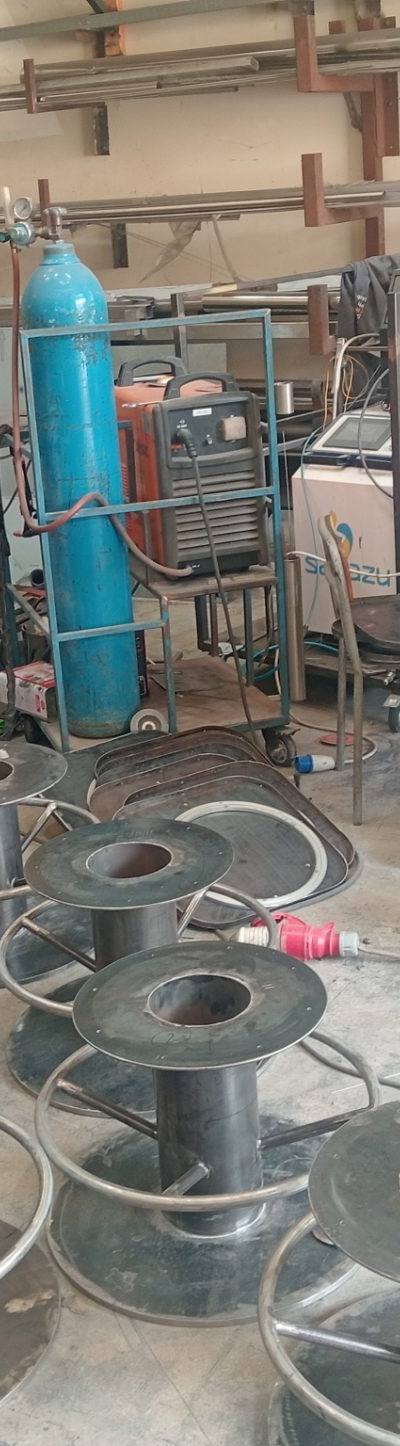
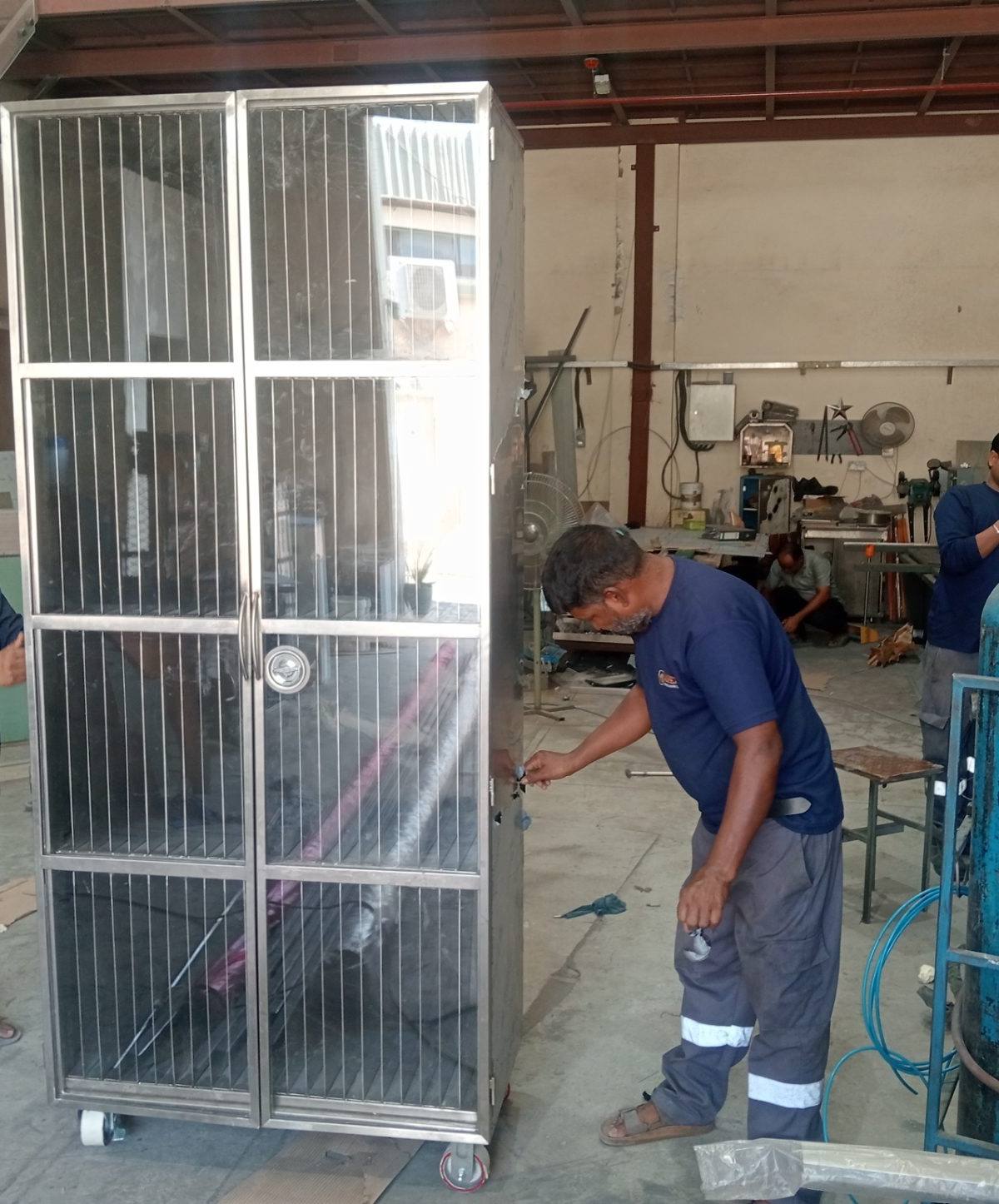
The same bench builds the rest of the job: cabinets with mesh doors on heavy castors, banks of staff lockers, stool bases. If the back bar needs lockers or a glass store, they can leave with the counter instead of arriving from a second supplier later. You can see recent stainless steel fit-out metalwork coming off that floor.
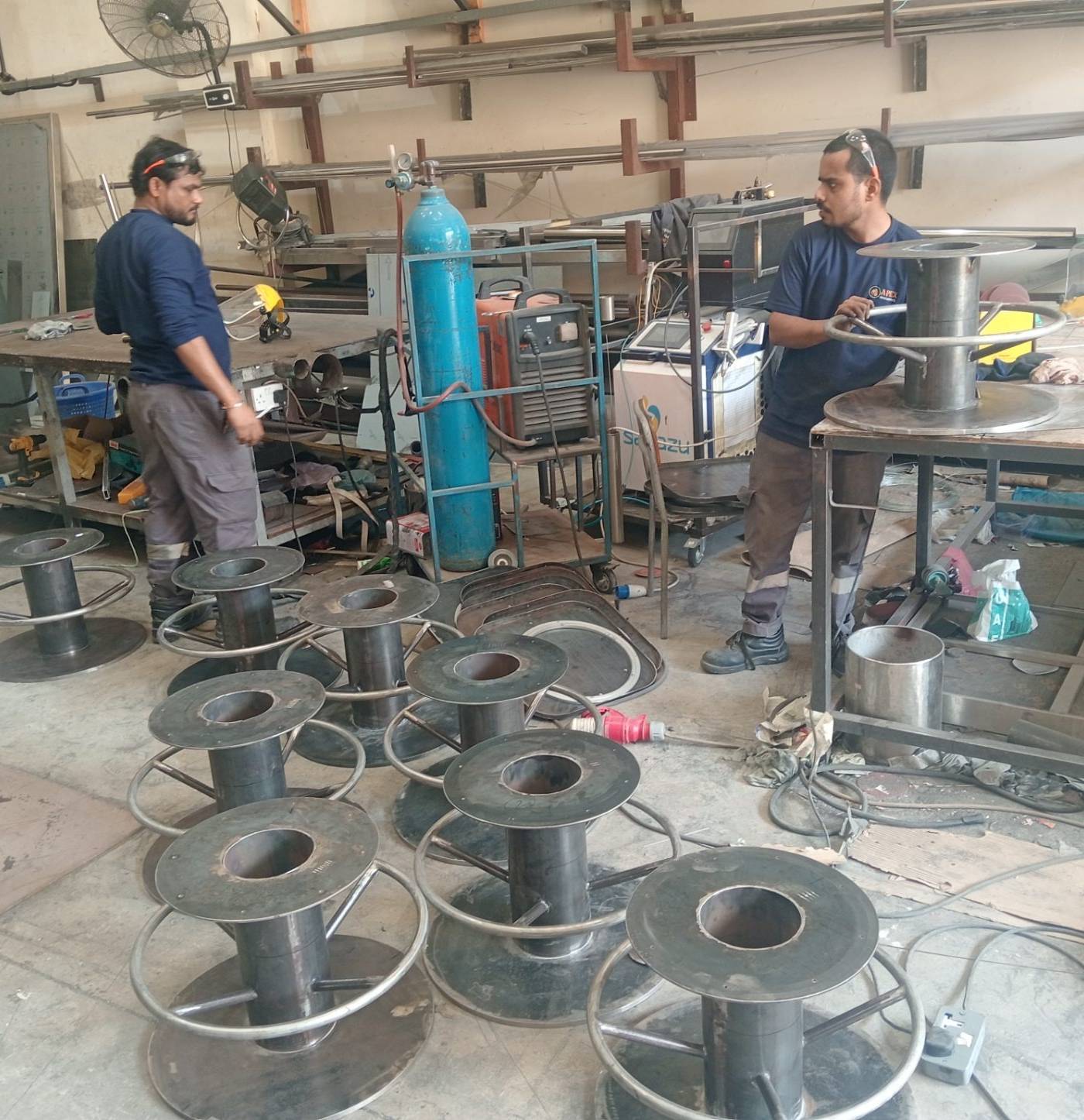 Stool bases and frames in progress. Counters, lockers and stools are built on the same floor, in the same finishes.
Finishes and grade: what survives a bar in the UAE
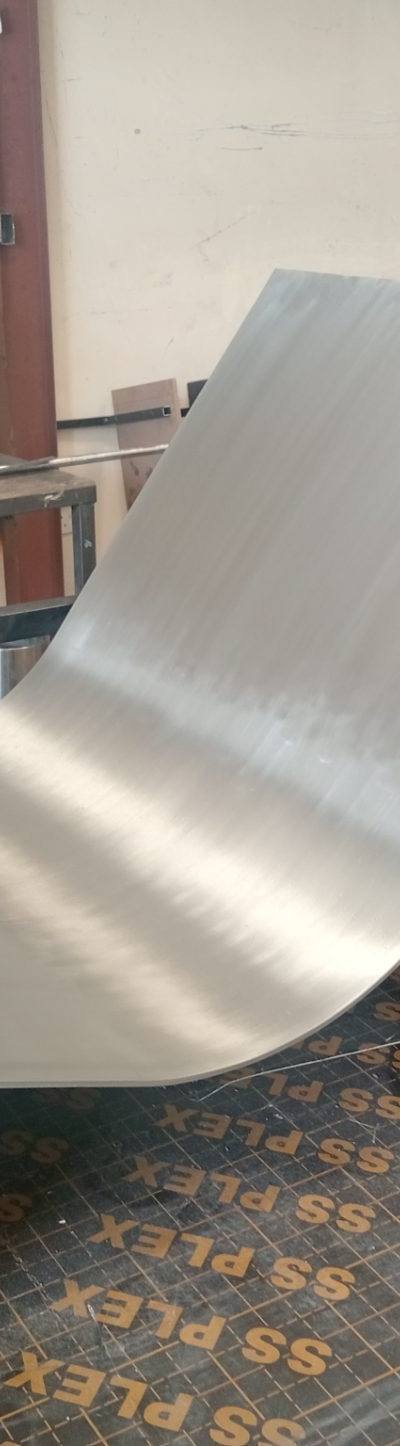
Brushed or satin is the default for the die and the foot rail. It hides fingerprints, repairs locally and takes a knock without showing it. Run the grain one way across every panel on the same face. Vertical on a tall die, because light raking across it at an angle will expose any panel laid the other way.
Mirror belongs where hands do not go: gantry shelves, shelf edges, the bottle display behind the bar. A mirror die at the pass looks superb at 6pm and tired by 10pm. Glass scratch shows first near the ice well, where glasses get set down in a hurry, so keep a brushed landing zone there whatever the rest of the top is.
PVD colour is a hard film and holds a uniform colour on high-touch surfaces. Electroplated finishes are done in our own workshop in Ajman, which means the die, the gantry and the foot rail can be matched to one designer sample as a set, rather than buying coloured panels one at a time and living with the drift between batches.
Grade matters as much as finish. Grade 304 is right for a dry interior bar. Move to 316 or 316L where water sits: the sink, the glass washer, the ice well, and any counter in a coastal venue taking salt air and daily chlorine sanitiser.
Fabrication accuracy: from drawing to site
A brushed front can have its welds ground and grained out so completely that you cannot find them. A mirror panel cannot. On mirror work, set the panel breaks so they land on a joint or a shadow gap, or accept that the weld will read.
Radiused dies need rolled panels, not bent ones. Sharp internal corners collect dirt and end up on the snag list. On the top, every cut-out serves an appliance with a flange, and a cut-out a few millimetres out shows beyond that flange, so the appliance schedule has to be fixed before the top is cut, not after.
Stainless is a skin. It needs a sub-frame in square tube, adjustable feet and a scribe allowance at the wall, because floors at a bar line are rarely dead level on a fast fit-out. Get those three right and the counter sits flat with an even gap to the wall. If you are specifying other metalwork on the same job, there are more fit-out metalwork guides on finishes and tolerances.
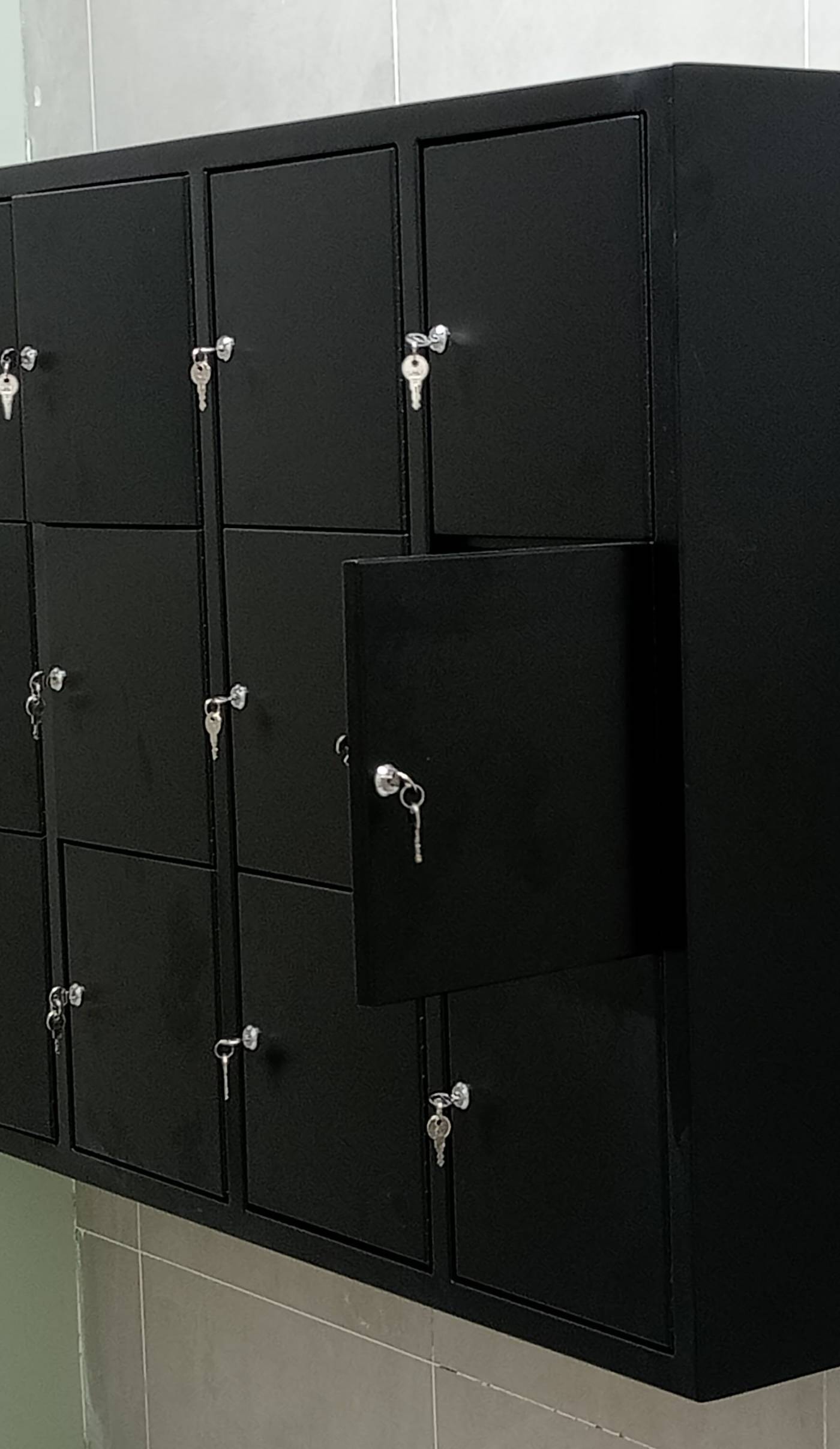 Sixteen lockers, sixteen doors, one consistent gap. A run like this is a tolerance test before it is a finish test.
What a fair fixed quote itemises
Two quotes for the same drawing are only comparable if both state the same things. Ask each supplier for these lines in writing.
| Line | What the quote should state |
|---|---|
| Material | Grade, thickness, and which parts are stainless and which are not |
| Finish | Brushed, mirror, PVD or electroplated colour, and whether a sample is included |
| Sub-frame | Included or by others, and who supplies the levelling feet |
| Scope | Supply only, or supply and install with the installers named |
| Delivery | To site, with access, loading bay and lift conditions noted |
| Snag | One return visit after installation is listed or it is not |
Most cheap quotes are cheap because the sub-frame, the finish sample or the install is missing, and those come back as variations once the bar is being fitted.
"The price was fair for the steel work. They made the staircase and balcony rails for a full villa. We hired them as a subcontractor on that job. They finished on time and the fit was good." Pushpjeet Singh, 5 stars
Fit-out contractors judge bar metalwork on fit and timing rather than on the sheet of paper, which is the pattern in our Google rating of 5 from 34 reviews.
Lead time, and how to send the drawing
Four things move a bar counter's delivery date, and only one of them is welding.
Finish approval comes first. An electroplated or PVD colour needs a physical sample signed off by the designer or the operator before any panel is processed, and that signature can sit unsigned for days.
Panel length is second. A top in one piece needs a longer sheet, a bigger polishing bench and a bigger vehicle. Split it into two panels with the joint on a bar division and the job gets simpler, but the joint is now a design decision.
Third, decide whether the workshop works from the drawing alone or measures on site. Drawing only suits a straight run against a wall that is already built. A site measure costs a visit and removes the risk of a bar line that is out of square over its full length, which is common in a fast fit-out.
Fourth, look at sequence. If the screed or the wall tiling is unfinished, the site measure is wasted and a delivered counter sits in a corridor collecting damage.
Send the plan and elevation as a PDF or a clear photograph of the printed drawing, a finish reference such as a photo, a colour code or a sample you already hold, the site location and building, and whether you want supply only or supply and install. Add a photo of the space if the bar sits against an existing wall. WhatsApp is fastest on +971 52 270 9796, and you can send your bar counter drawing for a fixed quote without booking a meeting first.
Frequently asked questions
Can you fabricate from the designer's drawing without a site visit?
Yes, for a straight counter against a finished wall. Curved dies, appliance cut-outs and walls that are not square are better measured on site, because a millimetre of drift at the wall becomes a visible gap at the bar top. Send the drawing first and we will tell you whether a measure is worth it.
Is 316 stainless necessary for a bar counter?
Only where water sits for hours. Sinks, glass washers, ice wells and coastal bars with salt air and heavy sanitiser use justify 316 or 316L. A dry front panel in an interior bar is fine in 304, and the saving is better spent on the finish.
Which is easier to keep clean, brushed or mirror?
Brushed, by a wide margin. It hides fingerprints, glass marks and the fine scratches a busy bar produces. Mirror is a design choice for surfaces nobody touches, so keep it on the gantry and the bottle display rather than the working face.
Can we match a colour from a designer's sample?
Yes. Electroplating is done in-house, so the die, the gantry and the foot rail are processed as one set and approved against a physical sample before production. Get that sample signed off early, since it is the step that most often delays a bar counter.