Electroplated vs PVD stainless steel finish: which to spec
Electroplating grows a coloured metal layer onto stainless in a plating bath. PVD lays a thin coloured film in a vacuum chamber. Both give you a gold reception counter or a black handrail, so they get quoted as if they were interchangeable, and they stop being interchangeable the first time a guest leans on the counter or a cleaner sprays it.
Two processes, two different sets of workshop constraints
Plating is a wet line. The part goes into a bath, current runs through it and metal builds on the surface. It has to be fully welded, ground and polished first, because welding a plated rail burns the colour off and polishing the weld afterwards takes off what is left. It also has to hang, drain and take electrical contact, so hollow sections need drainage and long thin sections need careful racking or they distort.
PVD runs in a vacuum chamber. The part is cleaned, racked, and coated in a straight line from target to surface. Nothing goes inside a closed tube and nothing wraps around a deep return unless the part is rotated. Chamber size caps how big a single piece can be, which decides whether column cladding ships as one skin or gets joints on the corners.
Substrate decides the outcome either way. The colour layer is thin enough to copy every scratch underneath it, so a 240 grit mark under a mirror PVD is still a 240 grit mark. Small prep decisions carry the job. That is why we ask for grade, prep and finished faces before pricing, and why we plate and finish in our own workshop in Ajman: electroplated stainless steel interior pieces made in our Ajman workshop.
They are very professional, knowledgeable, and pay attention to even the smallest details. alhaf malik, 5 stars
The comparison that decides a fit-out approval
| What the designer asks | Electroplated | PVD |
|---|---|---|
| Colour range | Warm golds, rose, bronze, deep black, set by bath chemistry | Gold, bronze, black, champagne, graphite, close to anodised aluminium |
| Panel to panel consistency | Moves with bath chemistry and rack position, so a large job wants one batch | Tighter panel to panel, smaller batch variation |
| Wear on touch surfaces | Softer layer, fine scratching shows on a daily-use handrail within a season or two | Harder film, holds longer where hands, rings and trolleys land |
| Cleaning chemicals | Ammonia and acid descalers attack it, and Dubai bar and kitchen cleaners are often exactly that | More tolerant, still not proof against chloride-heavy cleaners left to sit |
| Welded and re-polished areas | Weld is dressed and polished, then plated over, so the join disappears | Works, but a re-polished gloss that differs from the parent panel shows as a witness line |
| Edges and returns | Covers edges, and the inside of returns with auxiliary anodes | Line of sight, so edges can come out thin unless specified as finished faces |
| Repair | Can be stripped and re-plated in the workshop | Strip and re-run, no touch-up |
| Humid or exterior-adjacent areas | Not the first choice at an entrance door or beside a pool | Better, on 316 substrate with drainage designed in |
Neither finish rescues a bad substrate. In UAE humidity the grade does more work than the coating. A 316 handrail at a poolside is the decision that matters, and the colour comes second.
Where each finish is the safer spec
Bar fronts, reception counters, decorative screens, lift reveals and ceiling features lean towards electroplating, especially where the shape is complex and the intent is a warm gold or bronze. Racking and returns are easier to cover in a bath than in a line of sight chamber.
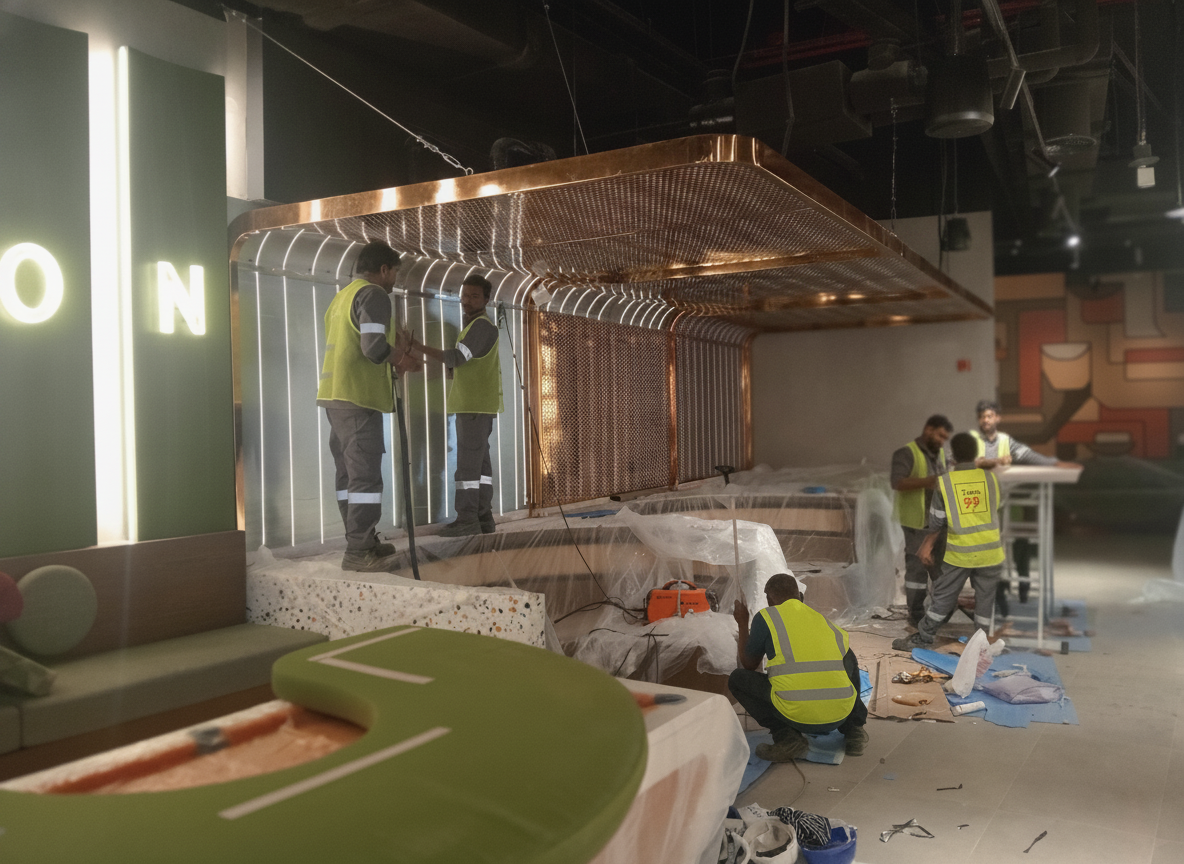 Gold-toned perforated metalwork going up in a commercial fit-out. Colour consistency shows most when panels sit side by side under the same light.
Handrails, door pulls, push plates, trolley rails and bar top nosing lean towards PVD. Anything a hand lands on two hundred times a day belongs in the harder film.
Column cladding is decided by chamber size, not by taste. Check the piece fits, and if it does not, put the joints on the vertical corner where the eye accepts them.
Mirror finish is decided by the polish, not the colour. In Dubai humidity a mirror finish near an entrance will water spot and fingerprint when glass cleaner drifts onto it. If the designer wants it, spec 316 and agree who cleans it with what, in writing. The exterior-adjacent door and the chlorine-rich back of house route go to 316 plus PVD, not plating.
The approval trap: sample panels and a drawing that can be priced
Photographs lie. A phone shot of a gold swatch under office downlights will not look like the same gold in your lobby under 2700K warm light next to a beige stone floor. Order a physical panel on the actual substrate, same polish, same batch. View it on site, at the counter or the wall where it will live, in daylight and again after dark with the final lighting on. Get the designer and the client to sign the back, keep it on site as the control sample, and photograph the signed face next to a ruler so the batch record is unambiguous.
A drawing that says gold stainless cannot be priced or defended. What we need on it:
- Process and colour name, so electroplated in a named gold or PVD in a named bronze, not simply gold finish
- Base material and gauge: 304 or 316, sheet thickness, tube diameter and wall
- Prep under the finish: mirror, satin or brushed
- Which faces are finished and which are masked, including the back of a bar front and the inside of a handrail return
- Mock-up requirement and who signs it off
- Fixing method, so a piece can be lifted off the wall and re-finished later
- One batch for the whole order
What drives our number on a job like this is not the colour name. It is the count of separate panels, how many faces get finished, how much masking the design forces, whether a mock-up panel is required, and whether the parts fit existing racks. Fewer, bigger panels usually cost less than many small ones covering the same area. For the same level of detail on other questions, there are more APEX fabrication and finish guides on the blog.
Failure modes, sequencing and who owns what
The failures repeat. Pitting at a weld because the heat affected zone was not passivated properly before finishing. Colour drift between the first delivery and the second after a site variation. Weld discolouration sitting under a thin film. A cleaner with an abrasive pad taking the colour off a plated handrail in week one. Thin colour on a PVD edge that nobody marked as a finished face. Re-polishing a coated panel on site, which removes the finish and cannot be undone.
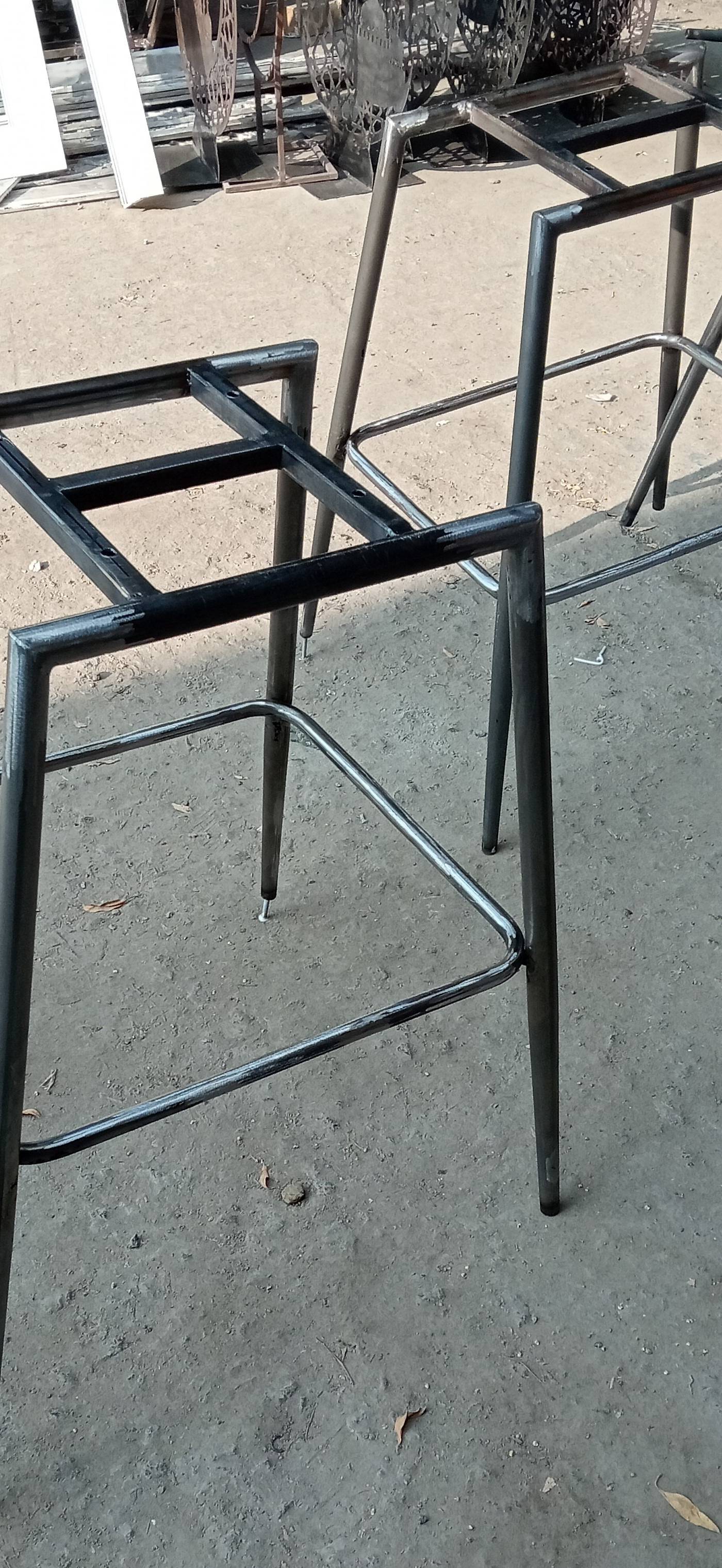 Frames fully welded and assembled before any colour goes on. Plating and coating are the last step, never the first.
Ownership usually sits with the drawing. Where prep, finished faces, mock-up and cleaning regime are written down, there is a referee at handover. Where they are not, the argument is open and the programme loses a week.
Sequencing hurts programmes more than the finish choice does. Welding, grinding, polishing and assembly finish before plating, never after. Finished parts come to site last, after wet trades and after the builder's clean, and stay protected until handover. Finish approval therefore has to happen before fabrication release, not while the frames are already welded. It is the one item worth chasing early.
For a quote on your job, send the drawing or a dimensioned sketch, two or three photos of the space and its fixing points, the finish reference you have approved, and the site location with access notes. Tell us which faces stay visible after installation, because that alone changes the price. WhatsApp is the fastest route, so send your drawing on WhatsApp for a free fixed quote.
Frequently asked questions
Is PVD always better than electroplating for stainless steel?
No. PVD is harder and more consistent on touch surfaces. Electroplating covers complex geometry, returns and mixed shapes more reliably, and it gives the warmer golds and bronzes. A decorative screen and a bar top nosing should not be specified the same way.
Can a scratch on a finished handrail be repaired on site?
Not properly. Once the colour layer is broken, a site polish leaves a bright patch of bare stainless. The rail has to come off, go back to a workshop and be stripped and re-finished. Specify removable fixings on anything that will be touched hard or cleaned roughly.
Will a mirror finish stainless steel stay mirror-like in Dubai humidity?
It stays bright if the substrate is 316 and someone dries it, and it will water spot and fingerprint when it is cleaned with sprayed glass cleaner and left wet. Near an entrance door or a pool the maintenance load is real. Ask for a satin option on the same drawing so the client can compare.
Which finish for a bar front that people lean on and cleaners wipe daily?
PVD on the lean and touch faces, with the decorative field in either process if the design needs a warmer plated gold. State which faces stay visible after installation, because the back and the returns can go unfinished and save an argument later.
Do I need a sample panel before the full order is finished?
Yes, and it should be the same substrate, same polish and same batch, viewed in the space under the final lighting. A printed swatch or a phone photo is not a control sample. Get it signed, keep it on site and reference it in the purchase order.