Electroplated stainless steel UAE: a fit-out spec guide
For a UAE fit-out, electroplated stainless steel is how you get a gold, rose gold, bronze or black finish that is genuinely metal, because the colour is deposited onto a polished stainless part rather than painted or wrapped onto it. The piece keeps the weight, edges and reflection of stainless and gains a tone that mirror and brushed finishes cannot produce. The real decision is plating against PVD, and which one suits the drawing in front of you.
What electroplating is, and where it beats mirror, brushed and PVD
Mirror finish is mechanical. The stainless is polished until it reflects, with no colour involved. Brushed is the same steel with a directional grain. Both are the base material, and both are the first step of every coloured piece we make.
Colour arrives one of two ways. Electroplating puts the part in a bath and deposits metal onto it, normally a nickel layer first and then the colour layer. PVD goes into a vacuum chamber and lays down a thin film. Both sit on polished stainless and both read as metal from a metre away.
Electroplating wins on colour depth and on short runs. Gold and rose gold come out warmer and heavier, and a single sample or a small batch of awkward shapes can be plated without setting up a line. PVD wins on hardness and on repeatability across a long batch, where every piece has to match the last. It takes knocks better on high-touch surfaces.
Two limits are worth knowing before you draw. Plating can thin out inside deep recesses and tight internal corners, so a folded return sometimes has to become a separate piece. PVD is line of sight, so a face it cannot see stays bare. Ask for a sample of the actual detail, not a flat plate.
Colour, and where Dubai fit-outs are specifying it
The working palette is gold, rose gold, bronze in its champagne and smoked versions, and black. Gold and rose gold dominate bar counters and reception counters, usually as a front face with a stainless top. Bronze and black go on lift lobby column cladding and feature wall trims, where the colour sits behind the lighting instead of competing with it.
Colour is rarely the whole package. Fit-out teams send the trims, the balustrade, the gate and the plated skins in the same envelope, and it all has to leave the workshop as one delivery.
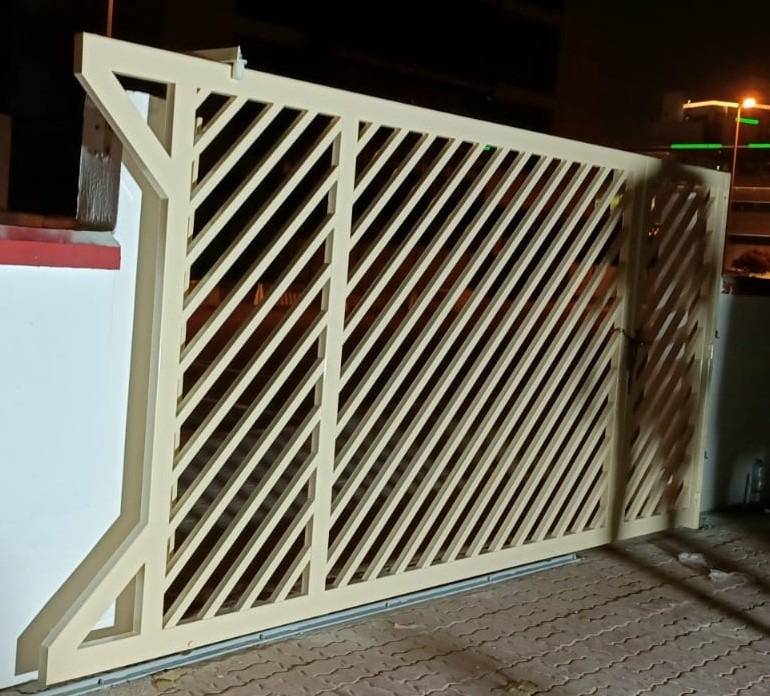 A beige sliding gate with diagonal slats, shot on site at dusk.
Table bases are the quiet volume job. A designer puts a plated or blackened base under a marble top, repeats it across a restaurant or a lobby lounge, and expects the finish to match across every one. That is a batch question before it is a colour question, which is why we ask how many pieces before we ask which gold.
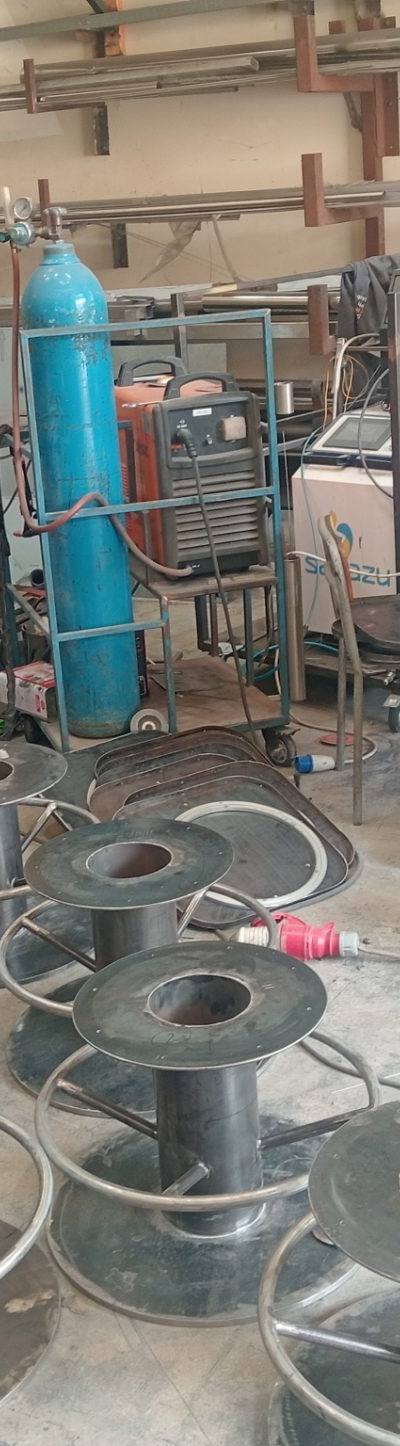
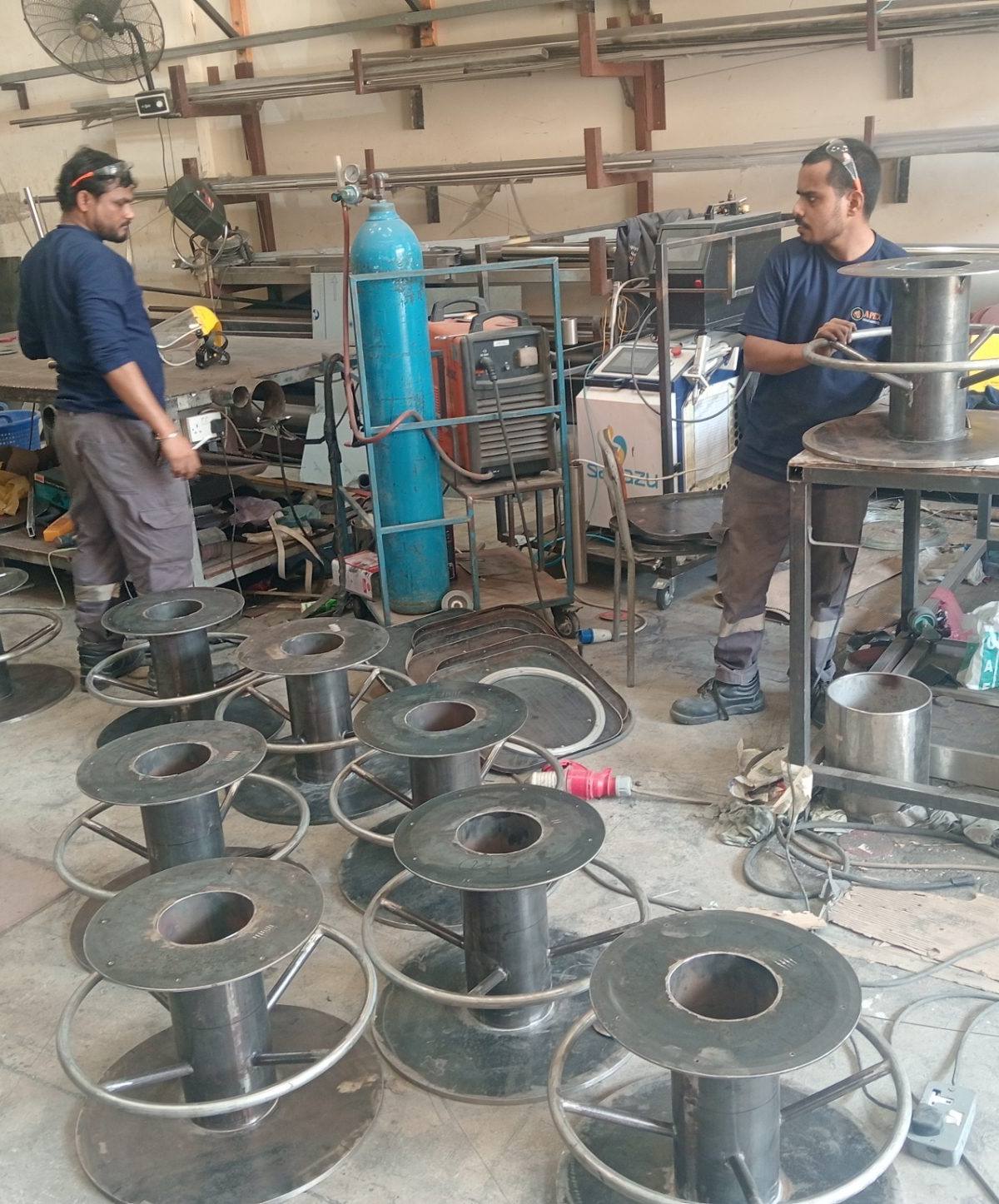
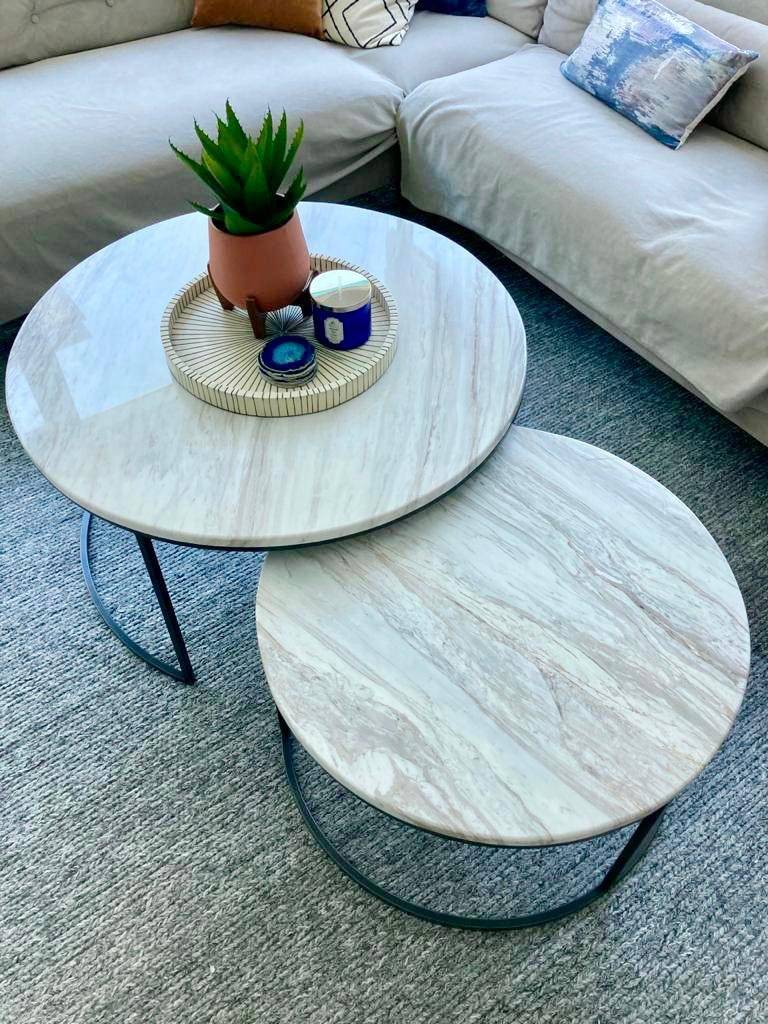 Black metal bases under marble tops, the same base unit repeated.
Mirror finish stainless cladding still does work underneath all of this. Bare mirror on columns with plated bronze on the stainless steel reception counter cladding is a common pairing in Dubai lobbies, and both finishes should be ordered together so the tones do not fight at handover.
The questions we ask before we quote
Grade comes first. 304 covers interior work. 316 costs more and earns it near the coast or anywhere wet, because it resists chlorides. For a column in a Dubai lift lobby, 304 is normally right. For a beachside property in Ajman or Sharjah, we ask the question out loud. There are more metalwork guides for fit-out teams on grade selection if the choice is still open.
Gauge comes second. Thin sheet under a mirror or plated finish shows every wave, and no finish hides it. If the drawing asks for 1.2mm across a wide flat panel, we will say so before the metal is cut.
Substrate comes third, and this is where most jobs go wrong. Plating amplifies whatever it sits on. If the carcass behind the cladding is not flat, the finish tells everyone who walks past.
Then scope. Who builds the carcass, you or us? Usually the fit-out contractor builds the substrate and we build the skin, the returns and the fixings. Say which, because it changes both the price and the sequence.
Fixings and returns last. How the panel turns at the edge, whether there is a shadow gap, whether fixings are concealed or exposed, and who drills on site. On a lift lobby column we ask for site dimensions rather than drawing dimensions, because a column is never square.
Fingerprints, durability and site maintenance
Plated mirror shows every fingerprint within a minute of the film coming off. On anything hands will touch, put the plating over a satin base rather than a mirror base. Keep the mirror for cladding and trims above hand height.
Durability is worth stating plainly. Plating and PVD are both thin coatings on stainless, not solid colour. PVD resists scratching and trolley knocks better. Electroplating gives deeper colour and lets us re-run a match sample quickly. Neither shrugs off a scraper.
Maintenance is where sites lose the finish. Leave the protective film on until handover, then peel it inside the window the supplier gives you. Clean with water, mild soap and microfibre. No abrasive cream, no chlorides. That matters on coastal projects around Ajman and Sharjah, where salt air and the wrong cleaner dull a plated face faster than foot traffic will.
Lead time, and what a fixed quote should itemise
The order does not change: drawing, approval, sample or mock-up approval, fabrication, delivery, then install by your contractor. Two stages eat the calendar. Colour approval, because gold and champagne can be argued about for a week. And the drawing itself, when the gauge or the return detail cannot be built as drawn.
The price was fair for the steel work. They made the staircase and balcony rails for a full villa. We hired them as a subcontractor on that job. They finished on time and the fit was good. Pushpjeet Singh, 5/5
That review describes the sequence we work to. We are a subcontractor to fit-out companies, so the main contractor owns the programme and we own the metal leaving the APEX Steel Works workshop in Ajman.
A fair fixed quote itemises the shop drawings, the grade and gauge, the base polish and colour reference, the edge and return details, the fixings, and delivery to the site address. Not a lump sum with gold written in the finish column. Our Google rating is 5 from 34 reviews, and the reviews that mention price mention it because the number was itemised before anyone cut metal.
To price this job, send the drawing as a PDF or DWG rather than a screenshot of a render. Add the elevation with dimensions, a photo of the colour you are matching, the piece count, the site location and who is building the substrate. WhatsApp is the fastest route and the free fixed quote comes back off that drawing, or start from the stainless steel fit-out fabrication page.
Frequently asked questions
Is electroplated stainless steel the same as PVD coated stainless?
No. Electroplating deposits metal from a bath onto the part, and PVD deposits a thin film in a vacuum chamber. Plating gives deeper gold and rose gold tones and suits short runs. PVD is harder and holds colour across long repeat batches. Both need a polished stainless base underneath.
Can a bar counter top in Dubai be electroplated?
Usually the top is not plated and the face and trims are. A working bar top takes glasses, ice and cleaning chemicals, so a brushed or satin 304 top with plated gold or bronze on the front gives the look with a surface that can be re-grained. Keep the plating where hands rest less.
Can you match a gold or bronze from a photo?
A photo gets us started, but approval should be against a physical sample or an existing piece on site. Gold, champagne and bronze shift under different lighting, and a phone camera shifts them again. Send the drawing with a photo, then approve from the sample.
What grade should column cladding be near the coast?
316 for anything close to salt water or regularly wet, including beachfront work in Ajman, Sharjah and Dubai Marina. Indoors and away from the coast, 304 is normally enough and costs less. State the site location when you send the drawing, because the grade changes the quote.