Electroplated vs PVD stainless steel finish: how to choose
On interior fit-out work, PVD usually wins on flat panels and high-touch tops: the film is harder and the colour repeats panel to panel. Electroplating usually wins on welded, multi-part assemblies, because the finish builds evenly into returns and shadow gaps that a line-of-sight coating cannot reach. Decide by the geometry of the piece and where hands will land, then write both into the PO.
The two processes, in workshop terms
Electroplating is a wet line. The stainless part is cleaned, activated and hung on a jig, then current deposits metal onto it in a tank. Because the electrolyte reaches into the work, deep returns, the inside of a fascia and the fold behind a shadow gap all take colour. The trade-off is that current density follows shape and contact points, so large flat panels need careful jigging to avoid a contact mark or a drift in shade across the sheet. Electroplated stainless steel in UAE fit-outs is usually specified for exactly that reason: complex shapes, warm colour, one process.
PVD is a vacuum process. The part goes into a chamber, metal vapour condenses onto it as a thin hard film over a base polish, and the rack rotates so every face gets coated. PVD coating on stainless steel for Dubai interiors is picked for the opposite reasons: harder surface, tighter batch repeatability, mirror and satin panels that must match wall to wall. It is also line of sight. What the chamber cannot see, it cannot coat, and the film is thin enough that polishing after coating is out.
Where the difference shows on a finished piece
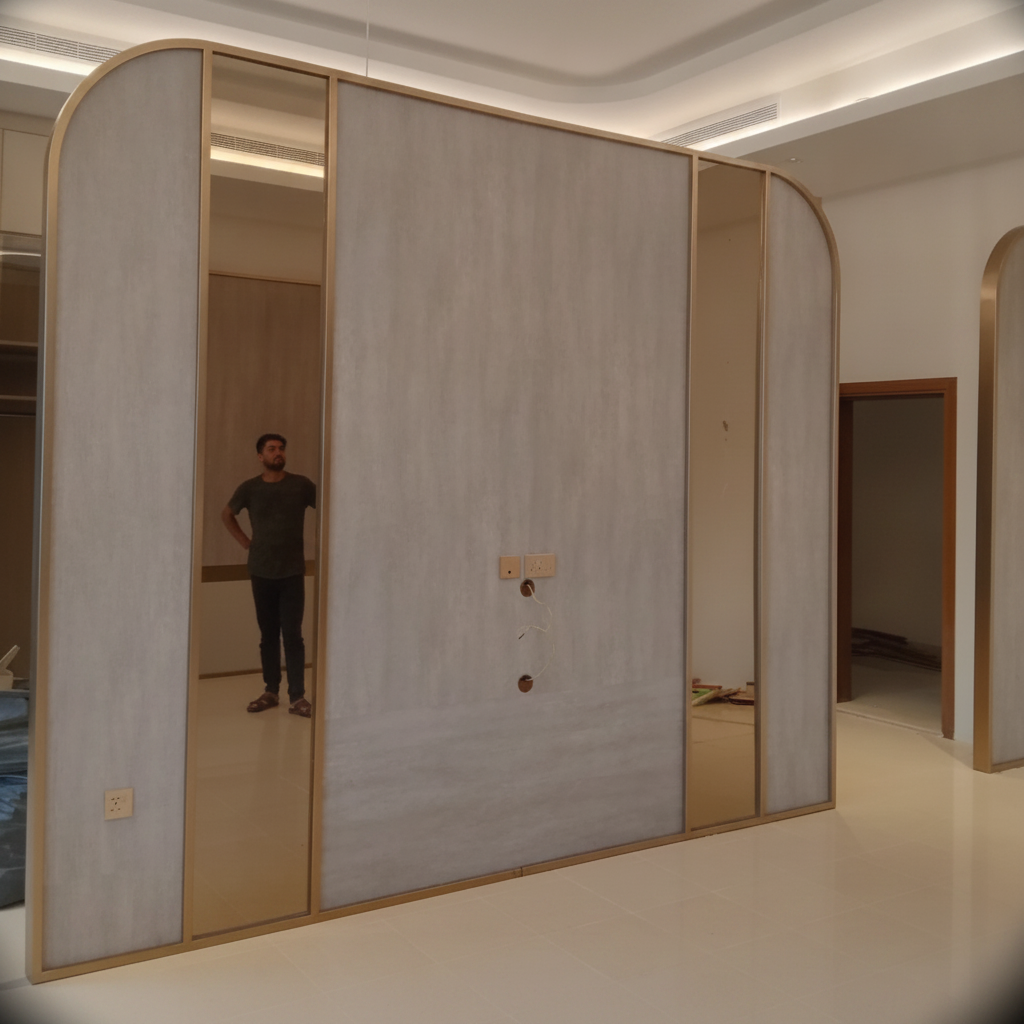
Rarely on a single flat sample. It shows on assembled items: a bar counter fascia plus its toe kick, stainless steel reception counter cladding with shadow gaps, column cladding split into three segments, a mirror finish stainless steel cladding panel set around a corner. Each of those has a joint, and a joint is where two batches, two jigs or two coating runs meet.
Two things go wrong there. Colour drifts between parts finished in different runs, and reflectance exaggerates the drift. On a mirror polish, half a shade of difference between two segments is visible from the doorway. On brushed or satin it hides. That is why so much stainless steel bar counter finish work in Dubai ends up brushed on the long runs with mirror reserved for the feature face.
Welded sections are the second pressure point. A welded and blended corner has to be finished, welded, ground back and finished again. Plating handles that sequence well because it goes on last, after the metalwork is complete. With PVD the discipline still applies, but any re-polish after coating removes the colour, so the order of operations has to be locked before the first section leaves the bench.
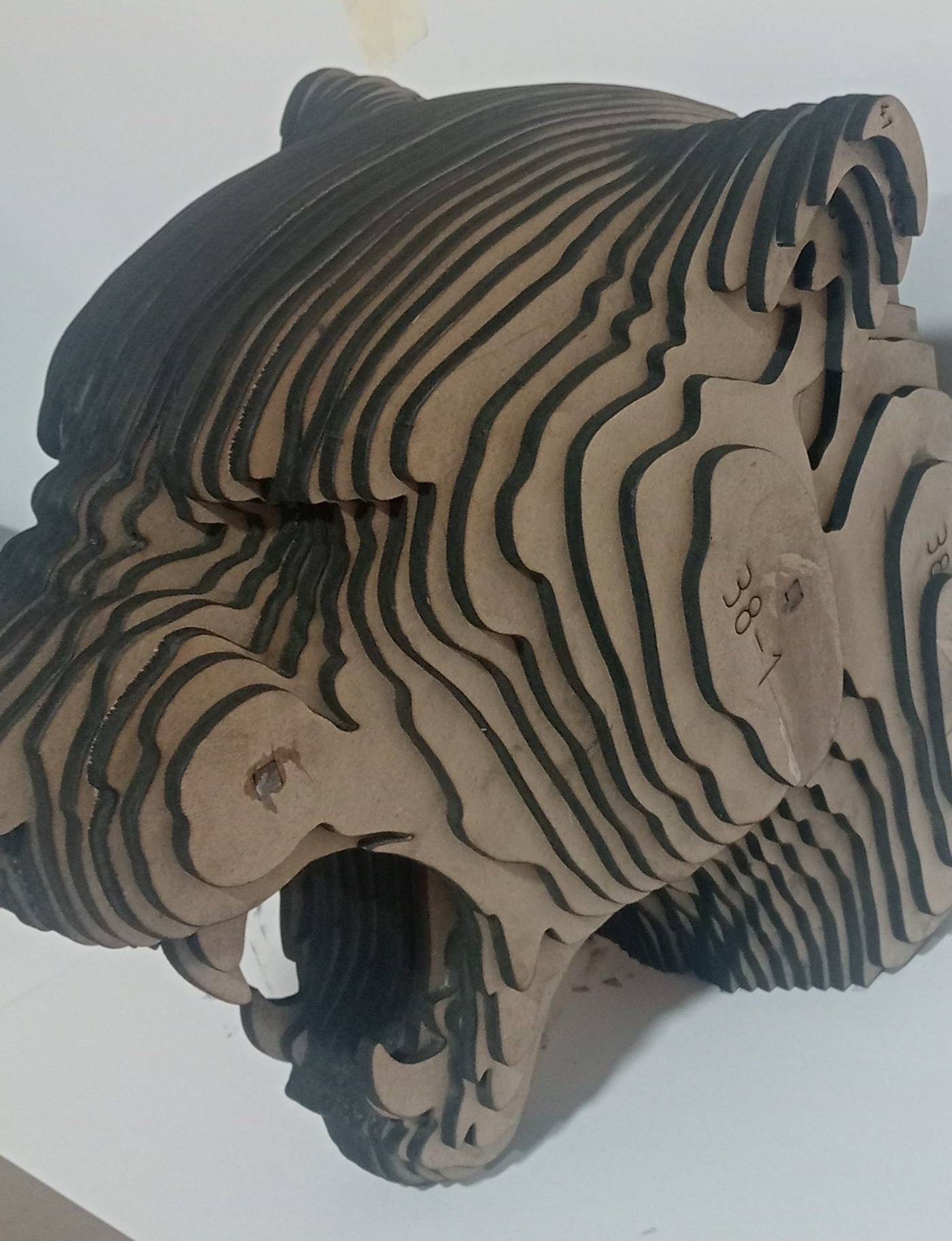 electroplated vs PVD stainless steel finish has to hold" loading="lazy" decoding="async" /> Layer-built work reads like a bar counter fascia in three segments: every joint and edge is a place where a finish has to match.
High-touch surfaces have a limit worth saying out loud
Bar tops, reception counter tops, handrail capping and door pulls take rings, keys, trolleys and cleaning chemicals. Any coloured finish, plated or coated, is a thin layer on stainless steel. On the wear patch it will eventually show the substrate beneath. PVD holds up longer under that abuse; plating gives you a wider colour range on shapes that a chamber cannot reach evenly. Neither is permanent on a working top.
So design around it. Keep working surfaces in brushed stainless and put the gold stainless steel finish in Dubai interiors on vertical faces, the fascia and the toe kick where hands rarely land. Specify satin rather than mirror on tops. Door pulls and handrail capping are the worst offenders because the same few square centimetres take every hand, so consider solid brass or uncoloured brushed stainless there and let the plated work carry the look.
Matching the designer's reference, and what happens when it drifts
A phone photo is not a reference. The same gold reads three ways on three screens. Send a physical sample or a code with the substrate stated, because the same colour over a mirror polish and over a hairline finish looks like two different metals. Then approve a physical mock-up before production, signed and dated.
The mock-up is the contract. If the shop piece leaves the bench outside the approved mock-up, that is the supplier's problem and a re-make. If the designer changes direction after signing, that is a variation. Most disputes in this trade are not about quality. They are about nobody agreeing which of the two pieces was the standard.
Repeatability, damage and the case for one roof
Phased jobs are where finishes fall apart. Three floors delivered over months means at least two batches. Ask any supplier how the second batch will match the first, and keep a signed control sample to settle it. If a panel is damaged on site, a plated piece can generally be stripped and re-plated. A coated piece usually has to be stripped and re-coated, and sometimes re-made if the dent is in the stainless itself. Either way the fastest route is back to whoever finished it.
That is the argument for keeping fabrication and finishing in one workshop, which is how we run it: interior stainless pieces with electroplated finishes, made at the APEX Steel Works workshop in Ajman. Transit protection, touch-up policy and the re-finish route all sit with the same team that welded the frame.
"The price was fair for the steel work. They made the staircase and balcony rails for a full villa. We hired them as a subcontractor on that job. They finished on time and the fit was good." Pushpjeet Singh, 5 stars
Fit-out contractors judge this trade on exactly those two things, timing and fit. We hold a Google rating of 5 from 35 reviews.
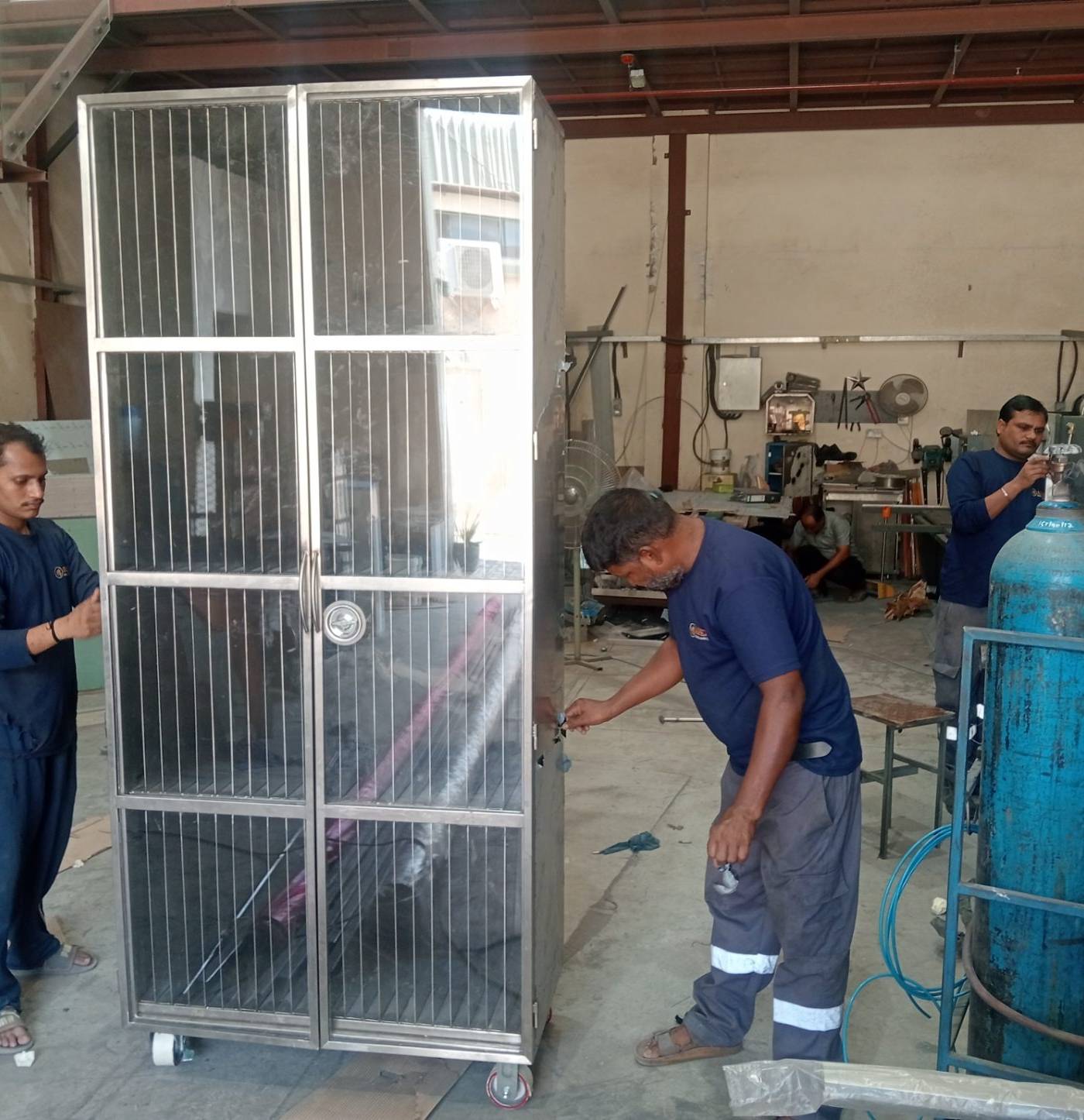 Bench work before the finishing line: assembly and edge treatment decide how the coating reads on the finished piece.
What to write into the PO
Copy this into the purchase order and the argument about finish is settled before it starts.
| Item | What to write |
|---|---|
| Substrate | Grade, thickness and the mill finish the coating goes onto |
| Finish type | Electroplated or PVD, named, not just gold |
| Reference | Sample number or colour code held by both sides |
| Sheen | Mirror, satin, brushed or textured, stated per surface |
| Edge treatment | Welded and blended, folded, or open edge with return |
| Mock-up gate | No production until the signed mock-up is released |
| Batch control | Control sample retained for later phases |
| Transport protection | Peel film, foam and crating, and who removes it on site |
| Touch-up policy | Who attends, what counts as a repair and what is a re-make |
Send the elevation drawing with the finish code written on it, one daylight photo of your reference sample with the substrate named, the linear lengths of the fascia, top and toe kick, and the site location and emirate. WhatsApp is the fastest route: send the drawing on WhatsApp for a free fixed quote and the price comes back as a fixed number against that drawing. If you want the background on how we sequence the rest of the job, there are more stainless steel fit-out fabrication guides on the blog.
Frequently asked questions
Is electroplated stainless steel suitable for a hotel bar top?
For the vertical fascia and the toe kick, yes. The working top is the worst place for any coloured finish, because rings, keys and glass bases land on the same small patch. Keep the top in brushed or satin stainless and finish the face the guest actually reads. If the design insists on colour on the top, plan for a re-finish and put the policy in the PO.
Can you match a gold finish to a sample I already have?
Send the sample, not a photo of it. Matching is done against a physical piece because the same colour over a mirror polish and over a hairline finish looks like two different metals. Once the match is agreed, a mock-up is approved and signed, and that mock-up becomes the standard the shop pieces are checked against.
What is the difference between electroplated and PVD on a door pull?
A door pull takes constant hand contact and cleaning, so abrasion resistance matters more than colour range. PVD is the harder film and lasts longer in that spot. Solid brass or uncoloured brushed stainless is the more honest answer if the pull is genuinely high traffic.
Can a damaged plated panel be repaired on site?
Not properly. Plating and PVD are both factory processes, and a touch-up pen on site is a cosmetic patch that will not match under raking light. A plated part can usually be stripped and re-plated. A coated part is stripped and re-coated, and re-made if the dent sits in the stainless itself.
Do I need to see a mock-up in person before production?
Ideally yes, or nominate someone on site to sign it for you. Colour changes with the light in a room, and a sample viewed under office lighting can read differently in a lobby. Once the mock-up is signed and dated, both sides are working to the same reference.